
Deed Types in Barry County
Deeds are just one part of the Register of Deeds index in Barry County. That index gathers every instrument that conveys or burdens real property. A deed records a claimed transfer of ownership. Mortgages, releases, easements, lis pendens, and land contracts each record something different. Barry County publishes no complete dropdown of document types. So treat the categories below as a practical classification of what an index search will likely surface. They are not a mirror of the portal menu.
| Deed Type | What It Does | Common Use |
|---|---|---|
| Warranty deed | Conveys the grantor's interest with stated title covenants. | An ordinary sale where warranty language is used. |
| Quitclaim deed | Transfers whatever interest the grantor holds without broad warranties. | Family transfers, estate cleanup, or curing a record issue. |
| Covenant deed | Uses the promises stated in the instrument. | A conveyance whose exact protection must be read in full. |
| Executor or court deed | Transfers under estate authority or a certified court order. | Probate and court-directed transfers. |
| Sheriff's or tax deed | Records a transfer tied to a foreclosure or tax process. | Distressed-property research requiring related notices and orders. |
The land-record trail in Barry County mixes more than deeds. Mortgages, assignments, discharges, tax liens, easements, rights-of-way, restrictions, plats, and court orders can all appear beside them. A mortgage does not transfer the same interest a deed does. A discharge may surface years later. It is often filed under the lender's name. Before deciding how any entry affects a parcel, read closely. Check its document type, the parties, and the date. Also note any cross-references and the legal description.
Barry County Deed Access Routes
The Register's search instructions split deed access by cost and depth. The courthouse keeps a free grantor-grantee workstation. Legal-description or parcel searches there run $1 per minute, and copies cost $1 per page. Staff will run a $5 search and can locate the latest deed. They will not perform a full title search, though. They will not search a property by phone or email.
Remote users have two paid doors. Tapestry EON charges $8.75 per search plus the standard image-copy charge. Laredo bills a monthly fee aimed at regular users. The Barry County recorder screen itself offers filters the office does not publicly document. Stick with the county-confirmed fields: grantor and grantee names, the legal description, or the parcel number. The county's own instructions page shows the difference. A free office visit and a paid remote session are not equivalent:
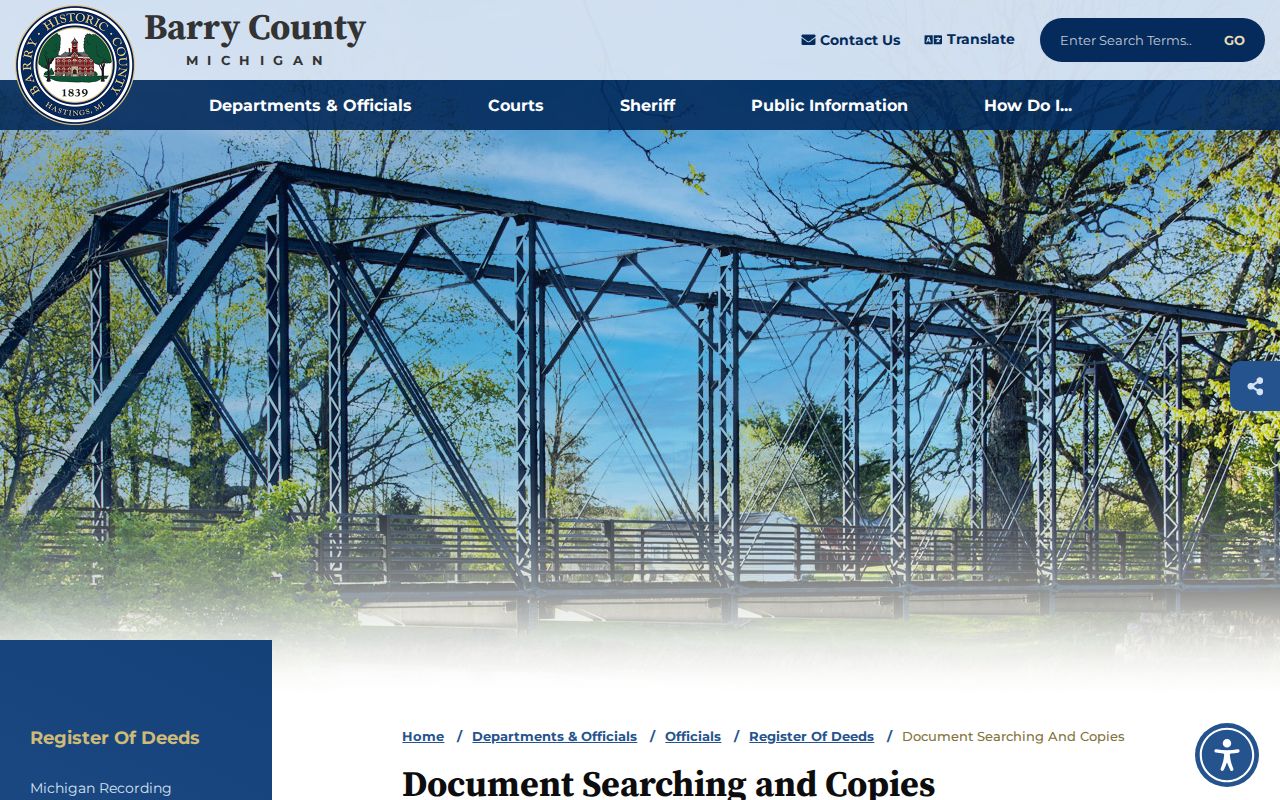
Those limits make the free workstation the better tool for repeated name searches. A narrow $5 staff request may suit a one-record question. Note: Confirm current fees and coverage with the Register before starting a long chain, because vendor terms and office practices can change.
Remote Barry Deed Index Search
Tapestry suits occasional remote use. An account and a payment step come first. The Tapestry entry point gives occasional searchers direct reach into Barry County deed records from home. Laredo aims at frequent, professional use. Neither access fee buys a legal opinion, and every index entry still has to be matched to the right land through the parcel number or legal description.
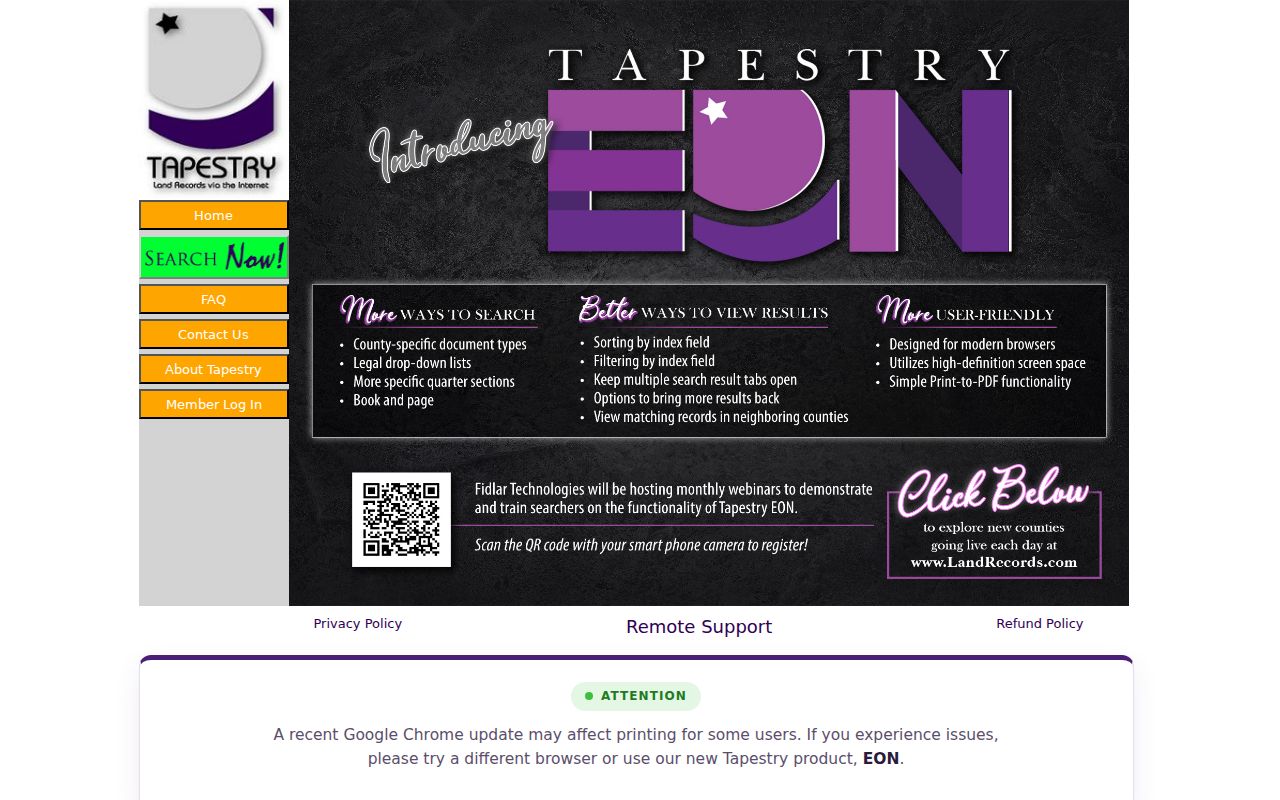
This screen is only an access gate. No Barry County deed result appears here. Log the query, the search date, the party-name spelling, the charge, and any instrument reference in a research log. When a name search returns several candidates, compare legal descriptions instead of grabbing the first match.
Barry County Grantor-Grantee Chain
The grantor hands over an interest. The grantee receives it. Barry County's index supports that party-name route. Begin with the current tax roll owner listed in BS&A or FetchGIS, then locate the newest recorded conveyance in the deed records. Only the full instrument, not the bare index line, carries the legal description and references that separate one parcel from a namesake or a neighboring tract.
- Record the current PIN, situs, roll owner, and exact legal-description terms before opening the deed index.
- Find the current owner's acquiring deed with that owner as grantee, then verify that the land description matches.
- Read the grantor's name and search that person or entity as an earlier grantee. Preserve each instrument number, date, deed type, and book/page reference shown.
- Repeat the same comparison until the accessible index ends, then ask for deed books, archived index volumes, microfilm, or other in-office material.
- Grantor
- The party that conveys the stated interest.
- Grantee
- The party that receives the stated interest.
- Chain of title
- The linked sequence of conveyances for the same land.
- Book and page
- A volume-and-page reference used to retrieve an older recorded document.
- Instrument number
- A unique filing reference assigned to a recorded document.
A name match alone proves little. Verify the parcel instead. Compare lot, block, addition, acreage, township, section, and any cited earlier deed, because trust, estate, joint-owner, and business names can reshape the indexed party while the land stays the same.
Barry Deed Coverage Has No Posted Start
Barry County's register of deeds posts no start date for its internal index. The Tapestry search has none either. That gap matters for older work. A remote search may reach back only partway. The office workstation could cover more or less. Ask the staff directly, and note the answer beside the date of your deed search. If a name falls outside the index, the chain still carries forward. Older deed books, plats, archived index volumes, microfilm, and written office requests all help.
Early Barry County deeds describe land by township, range, section, lot, block, or named addition. An address was often left out. The county was organized in 1839, so many deeds predate the modern PIN. An Archives of Michigan finding aid lists assessment and tax rolls. These can connect an older name to the parcel. Those rolls support the deed chain. They do not replace it.
Coverage boundary. Barry County does not publish an earliest online deed-index year. Confirm it with the Register before describing a search as complete.
The Archives of Michigan guide lists fallback groups for deed-book trails that cross an estate or an old tax description. Barry probate case files come in several spans. The ranges run 1860 to 1873, 1879 to 1913, 1863 to 1966, and 1846 to 1940, spread across distinct record groups. Assessment rolls survive too. Their series overlap, covering 1852 to 1901 plus later twentieth-century rolls. These are finding-aid ranges, not an online deed index. When requesting material, cite the record group, township, surname, and approximate year.
Keep an instrument log before moving between custodians. Each row should preserve the recording date, instrument number, deed type, grantor, grantee, consideration when shown, book and page, legal description, and any cited prior document. Add the case number when probate supplied authority. Note the representative capacity too. That discipline keeps an archive name match out of the deed chain unless the land description also matches.
Historic Plats Guide Barry Deeds
The Barry County History Portal plat collection holds scanned 1873 sheets. They cover Hastings wards plus many townships and villages. That vocabulary can unlock older Barry County deed records. Cite the sheet and year as historical evidence rather than silently translating labels into today's parcel lines.
Current Hastings planning material builds a concrete bridge. Supervisor Chase's Addition appears with a Liber 3 of Plats, page 1 reference. Other useful terms include the Original Plan of the Village, Jones & Taffee Addition, and Riverwalk Condominiums. Middleville adds its own search terms. Try Keeler's, Johnson's, Braddock's, and Shupe's Additions there. Carry the exact addition, lot, block, liber, and page wording straight into the deed index.
Note: Historic map labels open the search, while the recorded plat and deed control the document trail for a parcel.
Barry County Recording Alerts
The Register offers a free Property Fraud Alert. A subscriber registers a name. Email, text, or telephone notice then follows whenever a document is recorded under that name. The alert fires after recording. It neither blocks a filing nor validates the instrument. The signup page lists Barry County, Michigan among the available selections.
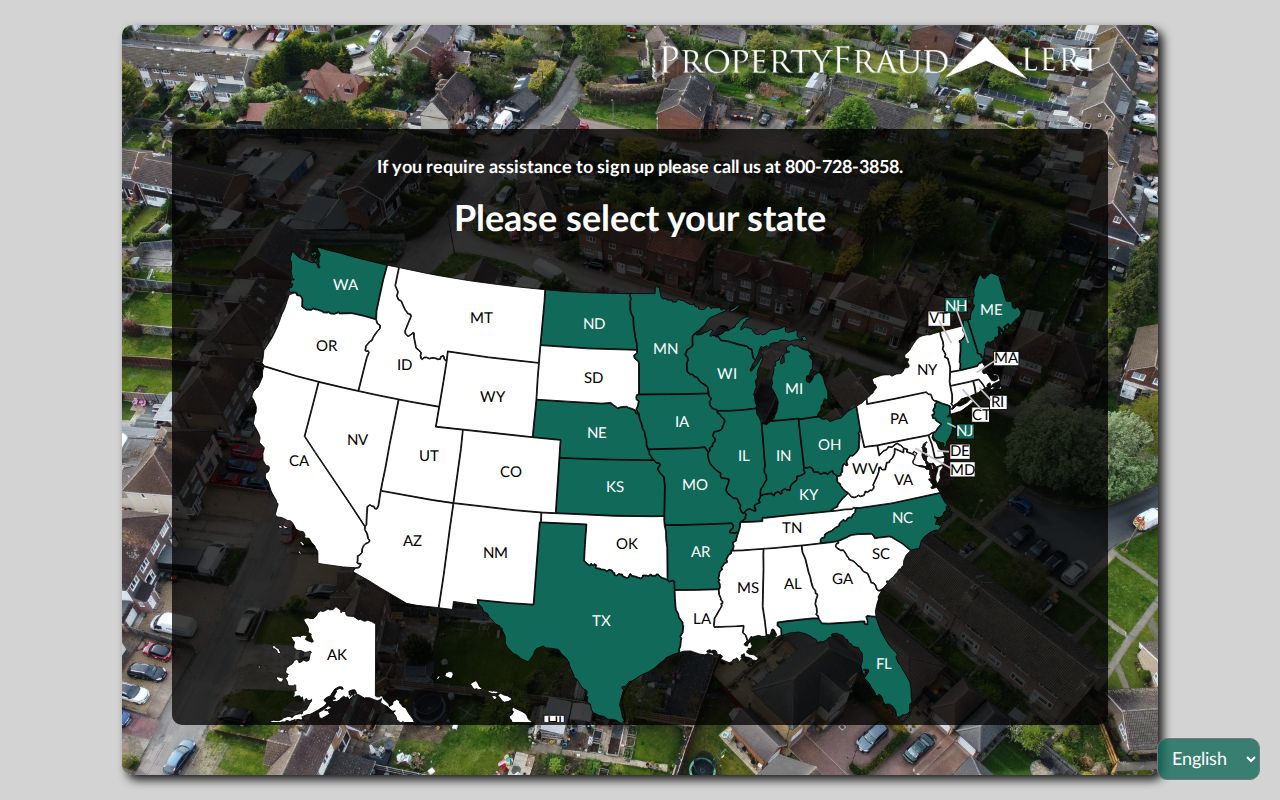
Use the notice as a prompt. Open the indexed document. Compare its parties and legal description with your own, and contact the Register about any unfamiliar filing, since a common name can trigger alerts unrelated to the subscriber's parcel.
Order a Barry County Deed Copy
Identify the instrument first. Then choose a copy channel. Online images may sit behind the paid remote system. At the courthouse, copies cost $1 per page. A staff search runs $5, and certification adds $5 to the copy charge. Mail requests should name the parties, PIN or legal description, approximate date, instrument reference when known, and whether a plain or certified copy is needed.
The Barry County Register of Deeds sits in Room 102, first floor, at the courthouse on 220 W State Street in Hastings. Published hours run weekdays from 8:15 a.m. to 4:45 p.m., with a noon-to-1 p.m. lunch closure. Phone calls work for confirming procedure. The office declines property searches by phone or email.
Recorded, not guaranteed. A Barry County deed record shows what was filed. Recording does not make an instrument legally correct, reveal every unrecorded interest, or provide a title opinion.
Surveys and full encumbrance reviews demand extra digging. Search every relevant name and instrument yourself, and read the cited exhibits. The office expressly declines that in-depth work. A consequential purchase or boundary question may call for a professional title search. It may also call for legal advice.
Keep a written request narrow. Distinguish retrieval from research. Supply the grantor or grantee, approximate recording date, PIN, exact addition or township terms, and any known instrument or book/page reference. State whether you want an index result, a plain image, or a certified copy. Order any cited exhibit, prior mortgage, easement, or court order separately. Do not assume it is attached. Preserve the office response and fee date with the resulting copy.