
Barry County Tax Record Fields
More than one office keeps these records in Barry County. A city or township assessor prepares the local assessment roll. County Equalization reviews that work but does not replace the local assessor. The Treasurer's office owns collection and delinquency questions countywide. Read each field with its source and tax year.
| Field | What It Shows | Where |
|---|---|---|
| Assessed value and SEV | Assessment figures tied to Michigan's equalization framework. | Local assessor roll |
| Taxable value | The capped or uncapped base used to calculate tax. | Local assessor roll |
| Principal Residence Exemption | Whether qualifying school operating millage relief is reflected. | Assessor and state guidance |
| Tax year and season | The period attached to a current or delinquent charge. | Treasurer tax history |
| Amount and settlement date | The amount reported due as of a stated date. | Treasurer-linked search or FetchGIS |
Michigan starts from True Cash Value. That is the usual-selling-price concept. Assessed value and State Equalized Value generally equal 50 percent of it. The constitutional cap can hold taxable value lower, and a deed's consideration is sale evidence, not the tax bill or the assessor's promise of market price.
Search Barry Tax Records in BS&A
The Barry County BS&A landing page lists Address, Name, and Parcel Number searches, plus Detailed Record Search and Delinquent Tax Search. Start with the PIN whenever you can. The PIN joins tax, GIS, and deed sources reliably. Results in Barry County vary by view. An advertised search mode does not prove that every result field is populated.
| Search Choice | Best Input | Check Before Relying |
|---|---|---|
| Address | Situs number and street | Block addressing and directional variants |
| Name | Roll owner or taxpayer | Trust, estate, and entity-name variants |
| Parcel Number | Exact PIN with leading zeros | Split, combination, or unit history |
The official Barry BS&A entry point was captured here:
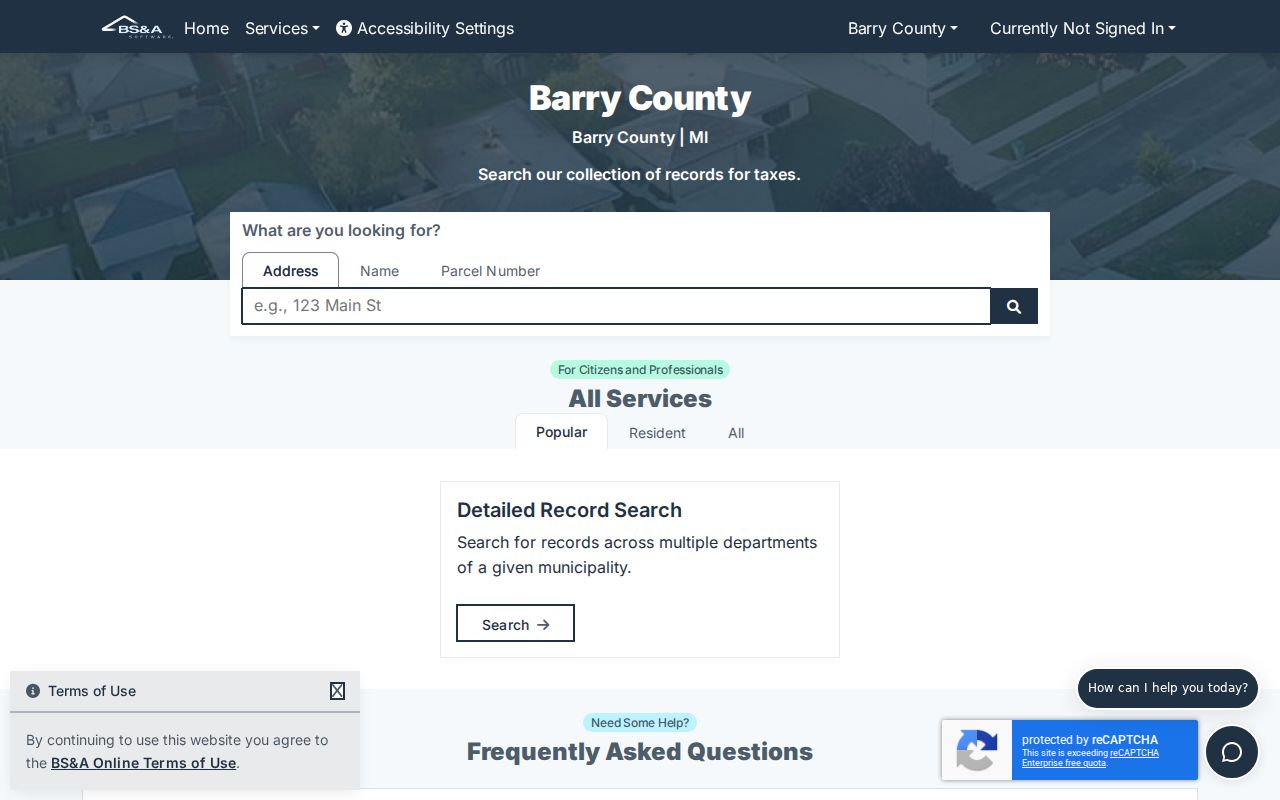
Log the municipality, year, query, and date. A blank field means that view showed no value, not that the underlying fact is zero.
Barry Assessed and Taxable Values
Value figures on one Barry County property tax record can disagree without either being wrong. Michigan's rules explain the gap. Assessed value sits near half of True Cash Value before equalization. SEV is the assessed value after state and county equalization, while taxable value, multiplied by applicable millage, can stay below SEV because of the cap.
- True Cash Value
- The usual selling price under Michigan assessment law.
- Assessed value
- Generally 50 percent of True Cash Value before equalization.
- State Equalized Value
- The assessed value after equalization, shown as SEV.
- Taxable value
- The value used to calculate property tax.
- Mill
- One dollar of tax per $1,000 of taxable value.
Taxable value usually uncaps the year after a transfer of ownership. The new ceiling is the parcel's SEV. That is why a new owner's Barry County bill can look nothing like the prior one, so keep sale price, True Cash Value, SEV, and taxable value in separate notes.
Look Up a Barry County Tax Bill
Begin with the parcel. Move from assessment to collection. The Barry County Treasurer links the delinquent-tax search and the payment route, while FetchGIS may show tax history; for a county collection question, the Treasurer-linked record is the better source.
- Find the exact PIN and assessing unit through BS&A or FetchGIS. Confirm the situs and legal description.
- Open the assessment record and note assessed value, SEV, taxable value, class, and any PRE field.
- Use the Treasurer-linked search for tax year, season, amount, status, and settlement date shown.
- For distress, separately check notices, recorded instruments, and court status. Delinquency is not a completed transfer.
The captured Treasurer-linked portal returned a vendor restriction:
A restricted view settles nothing about payment or delinquency. Contact the Treasurer if the online record is unavailable.
Note: FetchGIS says its delinquent information excludes unpaid personal-property taxes, so keep that category separate from real-property status.
Trace Barry County Tax Delinquency
A Barry County delinquency trail needs dates. Write down the PIN, situs, roll owner, tax year, and summer or winter season, plus the amount reported due. Add the indicator and the settlement date. Each later document is a separate event, so look for any Treasurer notice, foreclosure proceeding number, recorded tax deed or sheriff's deed, court case, redemption, discharge, and later roll update. An unpaid balance does not prove foreclosure finished, and a notice does not prove title transferred.
The Treasurer page links a Notice of Intention to Claim Interest in Foreclosure Sales Proceeds form. Its fields and deadlines change. The form's existence identifies a county process, not the status of any parcel. Get the current version directly from the Treasurer. Confirm claimant requirements, filing dates, and supporting documents. An older summary is no substitute for the form itself.
Michigan assessment mechanics stay separate from collection. A capped taxable value may uncap the year after a transfer. PRE affects school operating millage. It is not a delinquency cure. A Board of Review petition challenges assessment, classification, or an exemption issue, but it never settles a collection balance, so label the remedy sought before contacting an office.
Historic distress calls for the same separation. The Archives lists early unpaid-land records, sold-unpaid lists, a delinquent receipt book, lien lands sold delinquent, and later tax rolls. Record the period and series exactly. A later deed or probate file must still tie the tax entry to the land and transfer event.
Barry Principal Residence Exemption
Michigan's Principal Residence Exemption, or PRE, can remove up to 18 mills of local school operating millage from a qualifying principal residence. It is not the same as the state income-tax homestead property tax credit. The two get confused often. Do not infer qualification from a mailing address. Confirm current state rules too.
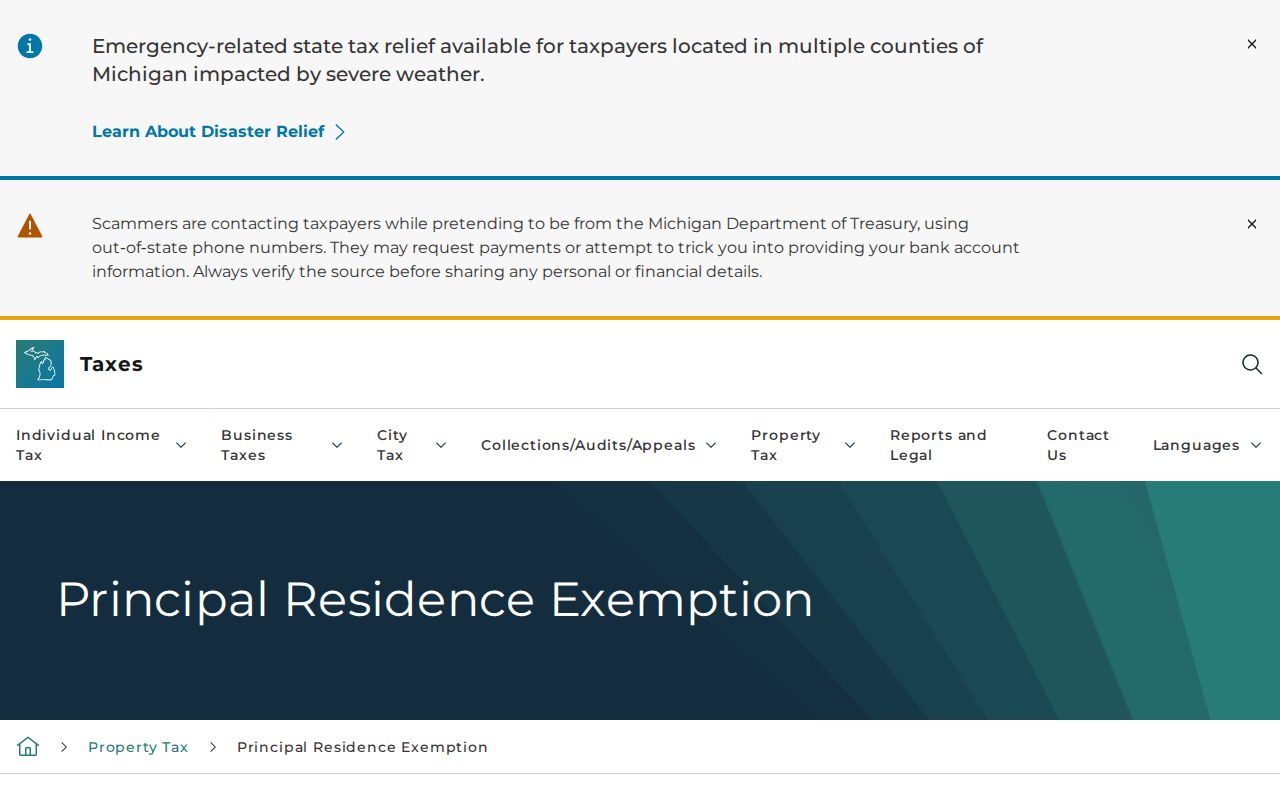
A Principal Residence Exemption changes the math on the tax bill, not the recorded title. Questions about filing go to the local assessor. That office covers the city or township holding the parcel.
PRE is not a general cut in assessed value. It applies only to qualifying school operating millage. The assessment roll still shows assessed value, SEV, and taxable value under Michigan rules. Track the exemption status when reviewing Barry County property tax records. Track the tax year too. A current state page may explain eligibility. The assessor's record shows how the parcel was actually treated on the roll.
Historic Barry County Tax Rolls
Current portals do not replace older Barry County property tax records. The Archives of Michigan guide lists assessment rolls from several periods. It also lists a tax ledger covering 1845 through 1849. A delinquent-tax receipt book runs from 1850 through 1865. Early unpaid-land and sold-unpaid lists appear too. The guide covers lien lands sold delinquent in 1919 through 1920. Later tax-roll groups round out the holdings.
When requesting, give the record-group number, township, owner surname, year, and legal description. A historic roll can show land was assessed or delinquent in a stated year. It cannot prove a conveyance. Pair it with a deed, plat, probate file, or recorded tax instrument. Rural property inventories from about 1939 may bridge a property snapshot to later records.
Keep two forms of distress apart. An unpaid-land list reflects the status of its own year. A later deed reflects a separate recorded event. Preserve the old taxing unit, parcel description, owner spelling, amount, and record-group citation. Do this before linking the entry to a modern PIN. An Archives guide may mark related material at Western Michigan University. Include that alternate custodian in the request. Do not assume the state file is complete.
Hastings 2026 Assessment Calendar
The Hastings City Assessor posted a concrete 2026 local example. Notices were due by the end of February. Residents were asked to contact the assessor by March 1 if none arrived. The organizational meeting was March 3. Hearings ran March 9 and March 10. Written protests were due March 6. Those dates do not apply to all Barry County units or to later years.
The official page displays that assessment schedule.
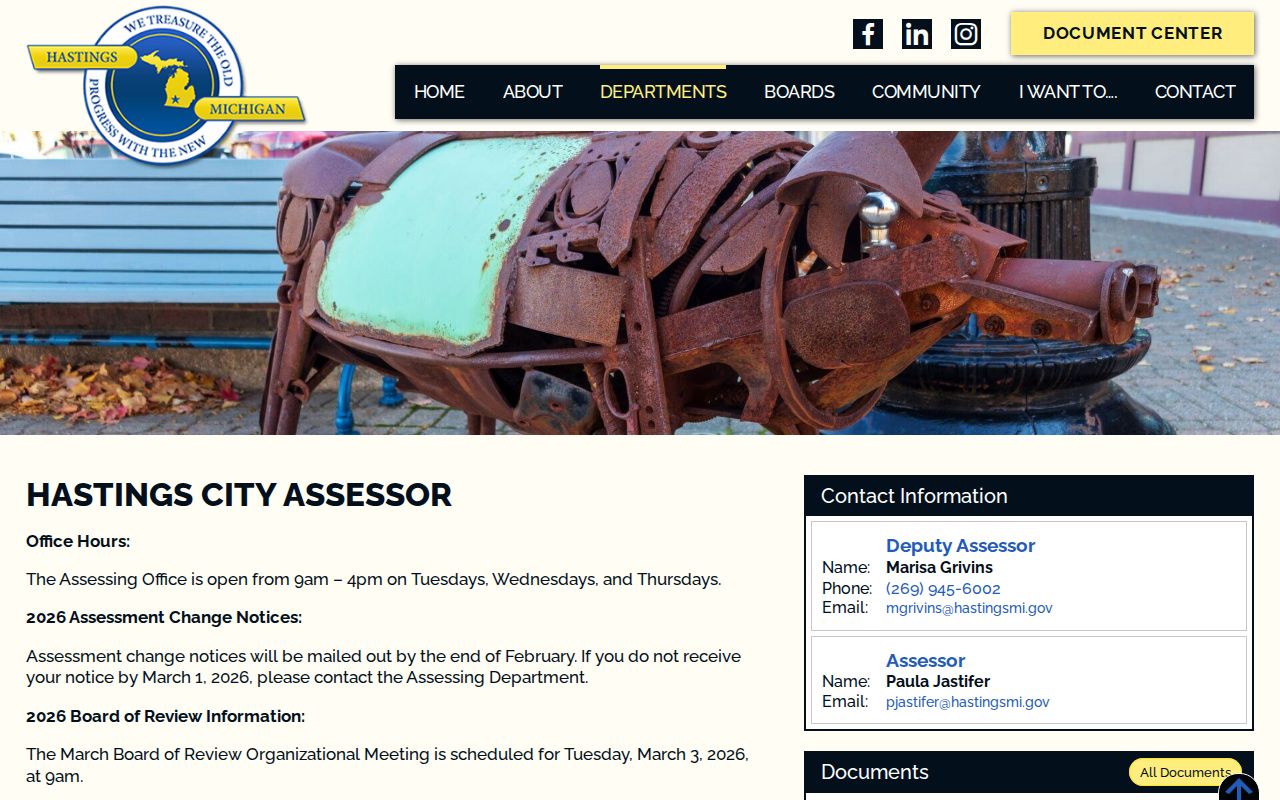
Elsewhere in Barry County, find the city or township assessor. Confirm its current notice and Board of Review dates directly.
Appeal a Barry County Assessment
An assessment dispute starts with the local assessor and March Board of Review. Michigan's Board of Review instructions identify Form 618/L-4035, the L-4035a worksheet, and the L-4400 notice. Build the claim from the actual notice, parcel traits, class, comparable evidence, and factual errors. Delinquency is a collection issue, not a valuation appeal.
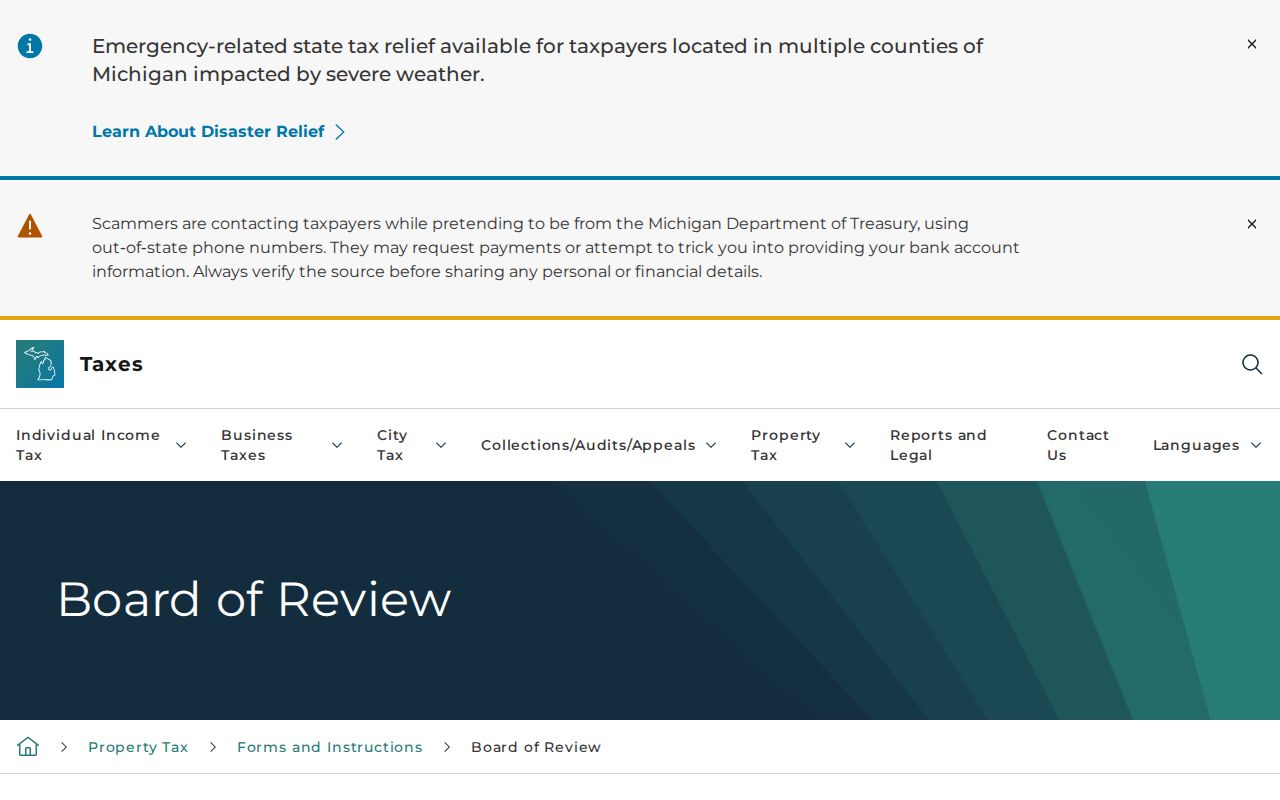
The state form and instruction page is shown here:
Eligible valuation disputes may proceed to the Michigan Tax Tribunal after the required local step. Check current deadlines each year. Poverty exemptions under MCL 211.7u use separate forms and financial information.
Good evidence answers the reason for the appeal. A wrong building size, class, acreage, or parcel description calls for source documents. Those documents should correct that fact. A value claim needs sales or other market evidence tied to the relevant assessment date. Bring the notice. Keep a copy of the petition, attachments, receipt date, and decision. A deed's sale price alone does not force the assessment to match. Michigan treats transaction price as evidence rather than an automatic rule.
Appeal window. Barry County dates vary by local unit and year. Confirm the current assessor and Board of Review deadline before filing.