
Identify a Barry County Owner
A careful owner search always pairs two public records. Barry County FetchGIS or the assessment system first identifies the parcel and the owner carried on the tax roll. Then the Register of Deeds supplies the most recent conveyance in its deed records. Keep the PIN, situs address, tax year, and legal description beside the owner name. Those details matter. They keep a similar name off the wrong parcel.
- Search the address in FetchGIS or Barry County BS&A. Copy the exact PIN and the displayed owner of record.
- Compare the situs, owner mailing block, acreage, zoning, and tax description. A blank field means only that no value was displayed.
- Search the Barry County Register of Deeds by the owner or parcel clues. Read the newest deed and identify its grantee, the party receiving the interest.
- Match the deed's legal description and references to the parcel. Record the roll year and recording date so any update gap remains visible.
Enter an address, name, or parcel number at the Barry County BS&A landing page. All three routes reach the same tax roll. The current Barry County owner record process goes deeper on the owner field.
Barry County Owner Fields
A FetchGIS property card can display the property address, a four-line owner address, unit name, acreage, zoning, tax description, sales data, value history, and building facts. Treat it as a dated roll display. Each card reflects one tax year. Not every field gets filled for every parcel. Some simply stay blank.
- Owner of record
- The name carried on the assessment roll for its displayed year.
- Situs address
- The physical property address, which can differ from the tax mailing address.
- Grantee
- The person or entity receiving an interest in a recorded deed.
- Title
- The legal ownership interest, which a portal result alone cannot settle.
The BS&A screen lists the Barry County search modes. Open the Barry County BS&A search source to try each one yourself.
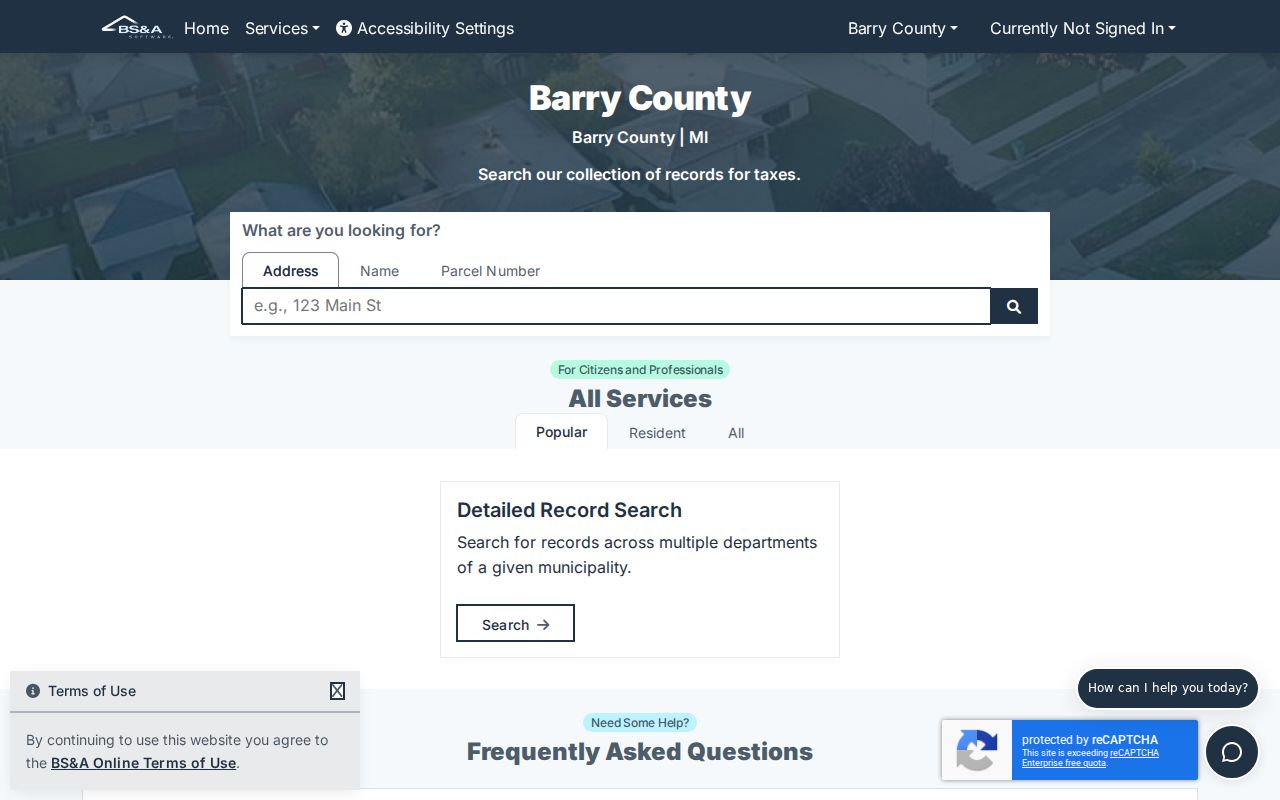
The screen shows the route, not any parcel's owner. Note the tax year on any result before trusting the name shown.
Confirm Barry County Ownership
The Register's published search instructions describe what the office will and will not do. Staff can pull the latest deed for you. They will not run a deep title search. They also will not hunt a parcel by phone or email. A free workstation at the courthouse handles grantor and grantee lookups. A staff search runs $5, copies cost $1 per page, and certification adds $5. Regular remote users can subscribe to Laredo monthly, or pay $8.75 per Tapestry search.
Once you have documents, compare them carefully. Check the grantee, the recording date, and the document type. Also note any PIN or legal-description clues, along with references to earlier instruments. Recording gives public notice of a transfer. Still, Barry County warns plainly that recording does not make an instrument legally correct. For a disputed or high-value ownership question, call a title professional. Do not rely on a portal screenshot.
Barry County Trusts and Companies
A Barry County tax roll sometimes lists an LLC, corporation, trust, estate, or personal representative instead of a living owner. No living person appears in that field. Keep the wording exactly as written. For a company, the Michigan LARA entity search can confirm the organization's formal name and status. It cannot prove which members benefit from the parcel. Nor can it show that the entity still holds title.
Estate ownership may call for a probate order. It may also call for a representative's documented authority and a recorded deed. Trust beneficiaries often stay out of the public owner field entirely. Try punctuation variants, initials, trustee language, and former business names. But insist on a matching parcel description before accepting any name as the owner of record.
Note: An entity registry explains the organization named on the roll, while the latest recorded land instrument supplies the stronger parcel link.
Barry County Ownership Sources
Each Barry County source answers a narrower question. The tax roll shows the owner carried for assessment, the deed index points to recorded transfers, and the GIS map joins a shape on the map to parcel details. Let none of them silently stand in for another.
| Barry source | Ownership evidence | Access route |
|---|---|---|
| Local assessment roll | Displayed owner, mailing block, tax year, parcel facts | BS&A, FetchGIS, or local assessor |
| Register deed index | Grantor, grantee, recording event, legal description | Free workstation, staff request, Tapestry, or Laredo |
| Michigan entity record | Formal company name and public entity details | LARA corporation search |
| FetchGIS parcel viewer | Mapped parcel tied to owner and situs fields | Free public viewer |
Dates matter as much as names. A deed recorded after the annual tax roll can be newer than the assessor's listed owner. Likewise, a mailing address may point to an owner, a tax agent, or an office, and it never establishes occupancy by itself.
Barry County Recording Alerts
The Register of Deeds offers free Property Fraud Alert enrollment. A subscriber registers a name. Notice then goes out by email, text, or phone. That notice fires when a matching document records against the registered name. The service only reacts. It cannot stop a filing, authenticate a signer, or decide whether fraud occurred.
Review the official Property Fraud Alert enrollment screen before enrolling.
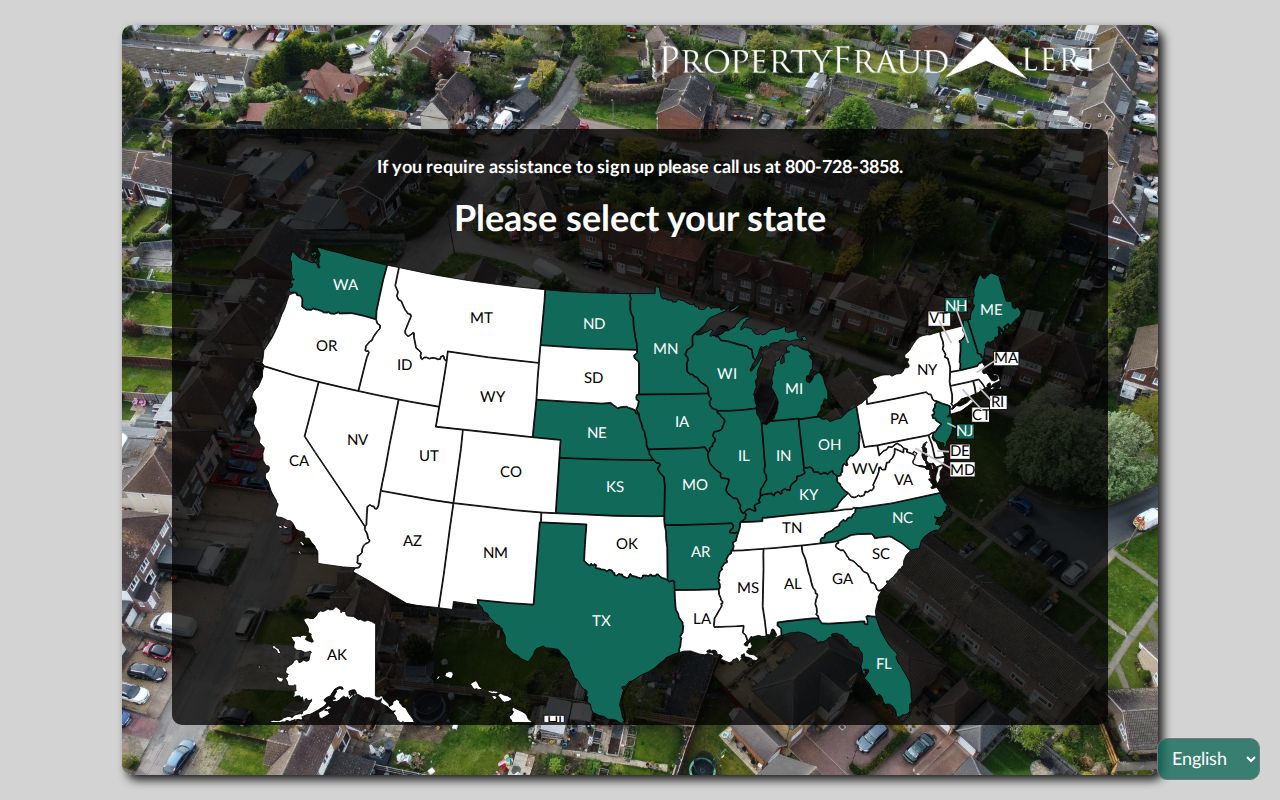
Enrolling the county and a name sets up useful future notice. Before acting on any alert, check it against the actual instrument and the Register's recording data.
Match Barry Property Descriptions
Barry County's 2024 general map carries a warning worth noting. City and village addresses follow a block system, not the rural addressing grid. A Hastings, Middleville, Nashville, Freeport, or Woodland address can behave oddly. Compare municipality, PIN, and legal description instead.
Legal descriptions vary widely. One may cite township, range, and section. Others run metes and bounds or name a platted addition with lot and block. Splits, combinations, and condominium units change identifiers. Matching the deed and tax roll on legal description, acreage, and PIN is stronger evidence. A street or surname alone is weaker.
Limits of Barry Owner Records
An official record may name the owner of record on a Barry County parcel, but ownership of record is not occupancy. It proves neither management nor benefit. Michigan's Address Confidentiality Program grants substitute addresses. Never try to reverse a protected address through other public sources.
Commercial data tools carry real risks. Their entries can be stale, merge namesakes, or miss trust and estate wording entirely. The tax roll and recorded deed are different. Their custodian and date are known, which gives them clearer provenance, though even they remain evidence rather than a title opinion.
Complex parcels deserve extra care. A parcel may hold several structures, carry a condominium unit number, or list an owner followed by "et al." The visible record can be incomplete without being wrong. Open the legal description and any referenced instrument before deciding which interest the displayed name represents, and where spouses, trustees, or personal representatives appear, stated capacity matters as much as spelling.
For a purchase or sale, a tax roll search is an early diligence step. It can reveal the custodian, parcel identity, and likely deed party. It cannot reveal everything. Unrecorded claims stay hidden, a forged instrument will not resolve itself, and marketable title is never guaranteed by a roll entry. The Register records public documents without endorsing their legal effect. County staff give no legal advice.
When an online result is uncertain, use the office channel tied to the question. The local city or township assessor can explain the current roll, a split, or a Property Transfer Affidavit in its parcel file. Register staff can locate the latest deed for the published search fee. The courthouse workstation offers free grantor and grantee searching. A request should name four things. List the PIN, party, date range, and exact record sought.
Michigan FOIA reaches nonexempt records. It does not make every detail public. One office is not custodian of all land data. A focused request identifies the public body, asks for an available electronic format, and seeks a cost estimate when search or review charges may apply. Address Confidentiality Program information must stay protected.
A careful ownership note preserves a lot. Record the query, source, retrieval date, assessing unit, roll year, PIN, situs, owner wording, mailing block, legal description, and deed recording date. Show both when the roll and deed differ. That dated comparison is the most honest answer to who owns the parcel in the available public records.
Older clues lead elsewhere. Hastings Public Library and the Barry County History Portal hold dated plats and newspapers that may connect a surname to an addition, township, or former address. Search the deed index next. A map clue is no substitute for a recorded conveyance, and every historic label must stay tied to its map year.
Ownership is not a title search. A roll name may lag a sale or name an LLC or trust. Use Barry County owner records for lawful property research, never to stalk, harass, or harm anyone.